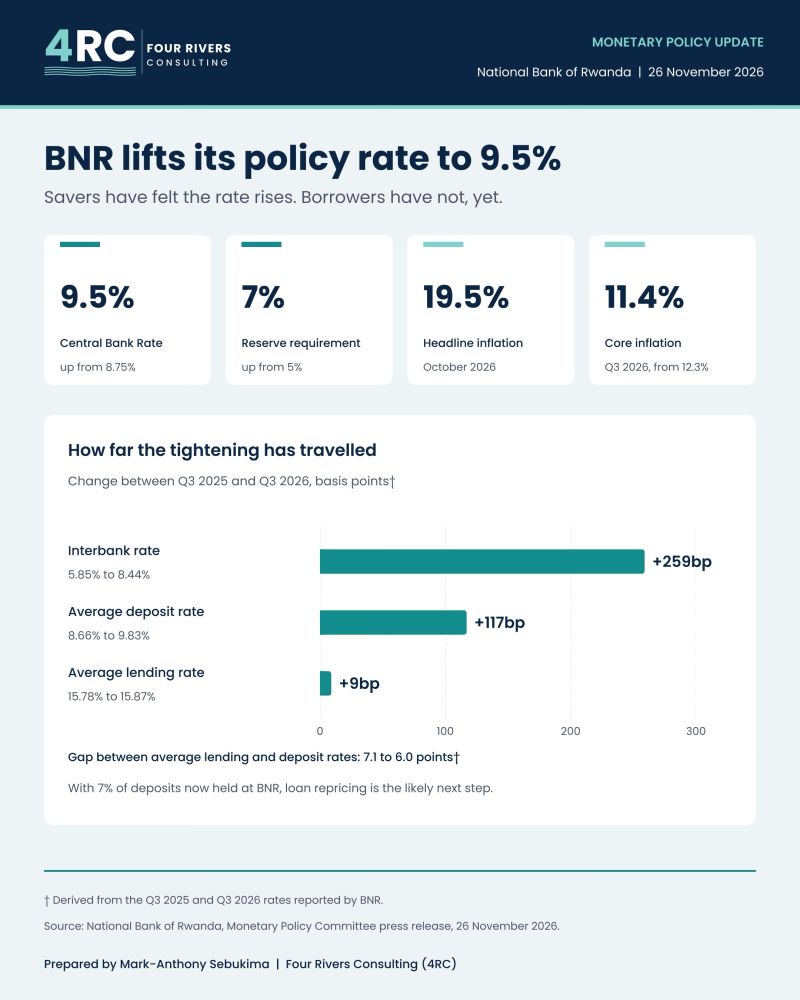
Between Q3 2025 and Q3 2026, Rwanda's interbank rate rose 259 basis points. The average bank lending rate rose 9.
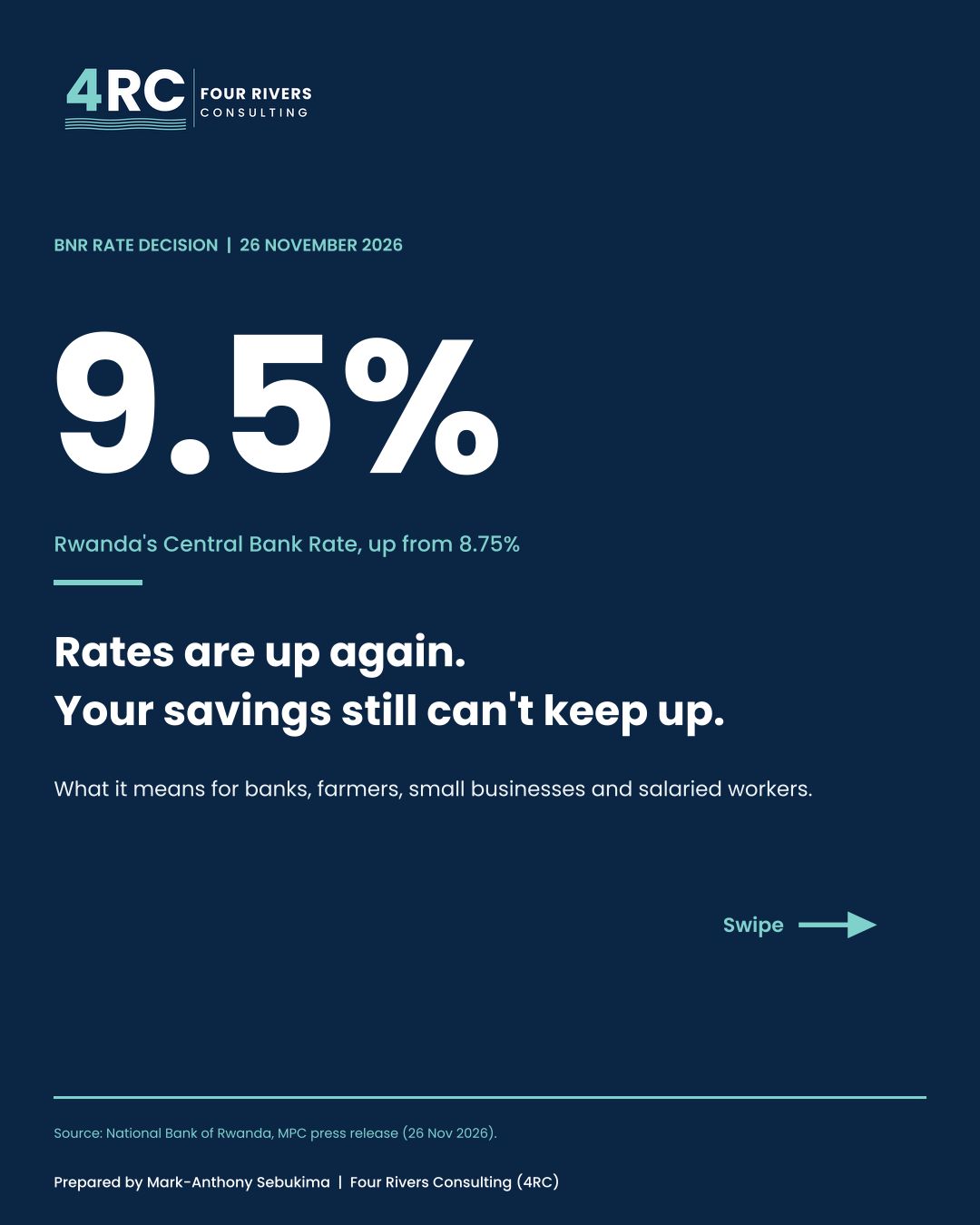
On 26 November the National Bank of Rwanda raised its Central Bank Rate by 75bp to 9.5% and lifted the reserve requirement from 5% to 7%. It is the fifth increase since August 2025, 300bp in all. BNR now expects 2026 inflation to average 14.4%, up from the 13.1% it projected in August, and sees inflation back inside its 2 to 8% band only by the end of 2027.
Two points stand out.
This is a food and fuel shock. Fresh food inflation rose from 7.3% to 21.7% in Q3, while core inflation eased from 12.3% to 11.4%. The policy rate sits 10 points below October's 19.5% headline but only about 2 points below core. A rate rise will not bring in a better harvest. Its job is to stop food prices spreading into rents and wages.
Savers have felt the tightening. Borrowers have not, yet. Over the same year, deposit rates rose 117bp and lending rates 9bp, so the gap between them narrowed from 7.1 to 6.0 points. With banks now holding 7% of deposits at BNR, loan repricing is the likely next step.
What this means in practice
- Banks
- Reprice new lending and check reset clauses on variable-rate loans. Keep bond portfolios short until inflation turns. Stress-test agro-processing, transport and salary-backed loans, and restructure viable borrowers early.
- Farmers
- Insure the next season under Tekana, where the government pays 40% of the premium. Put money into water and drought-tolerant seed. Store and sell in stages through cooperatives instead of selling everything at harvest.
- SMEs and MSMEs
- Ask for fixed or capped rates before banks reprice. A 250bp rise on a RWF 50m loan adds RWF 1.25m a year in interest. Release cash from receivables and slow-moving stock.
- Salaried workers
- At 9.83% on deposits and 19.5% inflation, savings lose about 8% of their buying power a year. Move idle cash into term deposits or T-bills and clear overdrafts first. Ask your bank when your loan rate resets.
The lasting fixes sit outside monetary policy: irrigation ahead of El Niño, cold storage for vegetables, faster clearance of EAC food imports, and farm lending tied to insurance. DFIs could take first loss on the storage piece, where losses and price swings are largest.
With GDP growing 9.4% in Q2 and the franc broadly stable, BNR has room to hold rates high. I expect 9.5% or more until at least mid-2027.
Sources: National Bank of Rwanda, MPC press release (26 Nov 2026); NISR, CPI October 2026; MINAGRI on Tekana.